Office Clearance in Penge
Office Clearance Penge provides a practical office clearance service for businesses, landlords and managing agents who need work carried out with care and organisation. The focus is on clearing office contents efficiently, separating items for disposal, reuse and recycling, and leaving rooms ready for the next stage of use. Whether the task involves a single suite, a shared workspace or a larger commercial floor, the service is aimed at removing unwanted items in a tidy, controlled way.
Our approach is suited to desks, chairs, shelving, filing units, IT peripherals and mixed office furnishings. We also handle general waste found during clearances, including box files, archived paperwork and day-to-day clutter that accumulates over time. If you are planning a move, refurbishment or lease end, it helps to have a clear scope from the start so the clearance can be arranged around what needs to stay, what needs to go and what needs special attention.
For a straightforward way to organise your office clearance in Penge, start with a brief outline of the space and the items involved. If you already know what should be removed, that gives a strong basis for a quotation request. If not, we can still discuss the likely work and help shape the next step. Ask for a quotation when you are ready.
Office clearance work for different business settings

Office clearance is rarely just a matter of lifting furniture and leaving. Different workplaces produce different mixtures of items, and the clearance plan needs to reflect that. A traditional office may include storage, desks, conference tables and printed records, while a smaller studio could contain a few key workstations, display items and office equipment. We keep the work focused on practical removal, so the space can be cleared in a way that suits the layout and the items present.
Where access is limited, the order of removal matters. Larger desks may need to be dismantled, filing cabinets may need to be emptied before shifting, and fragile items should be separated from heavier waste so nothing is damaged during loading. In a clear-out that combines furniture with general waste, sensible grouping can save time and reduce disruption. That careful sequencing is often what turns a difficult job into a manageable one.
Typical office clearance items include the following:
- Desks, meeting tables and reception furniture
- Office chairs, storage units and shelving
- Computer accessories, printers and small electricals
- Paper records, boxed documents and archive materials
- Mixed rubbish gathered during an office move or tidy-up
Furniture, equipment and general office contents

Office contents often divide into several categories, each needing a slightly different handling method. Furniture can usually be cleared by size and condition, while equipment may require extra care if it includes cables, peripherals or sensitive components. General office rubbish is often best removed separately, especially where bagged waste has built up alongside reusable items. A good clearance plan takes these differences into account rather than treating every item as identical.
When a workspace still contains useful furniture, it can be helpful to separate what is being retained before the clearance begins. That makes it easier to avoid accidental removal and supports a more orderly process. For businesses replacing their office fit-out, a mix of old and new items may need handling in stages. We can work through the contents room by room, which is often the clearest way to manage a space with multiple work areas or storage zones.
Clearance decisions are easier when the main groups of items are identified early. A brief inventory, even if informal, helps distinguish between items for removal and items to stay in place. If the job includes items that need special handling, such as IT equipment or locked storage, it is worth flagging those details at the outset so the clearance can be organised sensibly and carried out with the right level of care.
Clearance planning, access and quotation details
Most office clearances become simpler when the customer can describe the type of premises, the floor level, the amount of furniture and whether the building has lift access or other constraints. Those practical points affect how the work is planned and help form a quotation that reflects the actual clearance rather than a rough guess. If any items are bulky, fixed, fragile or awkward to move, it is useful to mention them before the job is booked.
A quotation request is usually stronger when it includes the scope of work, the approximate room count and any timing considerations, such as whether the clearance must be completed before a handover or after staff have left. Photographs can also be helpful, especially for mixed rooms where furniture, files and loose waste are all present together. One clear message can save back-and-forth later. It is also sensible to note if parking, loading access or building entry is restricted.
If you are comparing your options, remember that the most useful quote is one that reflects the actual contents and access conditions. That is why we prefer a clear description rather than vague labels. Tell us what needs to be removed, what needs to stay, and whether the office is occupied, empty or partly cleared. That gives a better basis for a practical response.
Recycling, reuse and responsible handling
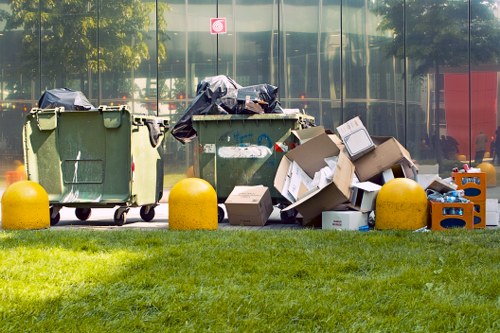
Office clearance work often produces a mixture of reusable furniture, recyclable materials and waste that must be disposed of appropriately. Where items are in usable condition, separating them from broken or heavily worn pieces is a sensible first step. Materials such as metal shelving, wooden furniture and some packaging can often be sorted differently from general waste, helping the clearance proceed in a more organised way.
The responsible handling of office contents also matters because workplaces frequently contain items that have been used for years and gathered in corners, cupboards and store rooms. Clearing those spaces carefully means removing what is no longer needed without creating unnecessary mess. In many cases, the best approach is to treat the office as a set of zones, moving through each one methodically so that useful items are not mixed up with discarded material.
We can support clearances where sustainability is part of the plan, especially when customers want an orderly separation of reusable items from waste. That said, the exact route taken by individual items depends on their type and condition. The practical point is simple: a thoughtful office clearance is not just about making space, but about handling contents in a way that makes sense for the premises and the items involved.
End-of-lease, refurbishment and move-out clearances
Office clearances are often tied to a change in occupancy. A lease end may require desks, filing systems and loose contents to be removed before the keys are handed back. A refurbishment may mean stripping out outdated furniture so decorators or contractors can work without obstruction. A relocation can leave behind surplus items that are no longer needed in the new premises, even though they were useful in the old one.
These jobs benefit from a practical sequence. The first step is usually to identify fixed items, reusable furniture and items marked for disposal. After that, the clearance can be arranged around access, timing and any restrictions in the building. If multiple rooms are involved, a room-by-room approach helps keep the work orderly and reduces the risk of leaving behind smaller pieces hidden in storage or corners.
When the work forms part of a move or handover, the main aim is to leave the office clear and usable for what comes next. That might mean preparing for contractors, returning the space to a landlord standard or simply ensuring nothing unnecessary is left behind. For a prompt start, send the details you already have and we can discuss the most suitable way forward.
About Penge
Penge is a district in the London Borough of Bromley, in south-east London, with a history shaped by suburban growth, transport links and the spread of Victorian and Edwardian housing. The area sits close to Crystal Palace and Anerley, and its streets include a mix of older terraces, later residential development and local shopping parades that reflect successive phases of urban change. Penge High Street remains a well-known local spine, while nearby road patterns and rail connections link the district to neighbouring parts of south London. The area has long been associated with movement between boroughs and with the everyday life of a busy residential quarter rather than a single dominant landmark. Parks and open spaces add variety to the built environment, including Cator Park and the wider green corridors that thread through the south-east London landscape. The locality also has a cultural identity shaped by its position near historic Crystal Palace, which influenced the surrounding district’s development in the nineteenth century. Railway stations in and around Penge have helped define its growth and daily character, giving the area a commuter rhythm that sits alongside local shopping, schools and community facilities. Architectural interest is found in the surviving mix of period housing, civic buildings and commercial frontage, while the wider borough context brings together suburban streets, parkland and links towards Beckenham, Sydenham and Bromley. Penge therefore presents itself as a place with layers of urban history, practical connections and a neighbourhood feel that comes through in its streetscape and public spaces.
Office contents, paperwork and sensitive materials

Many office clearances involve more than desks and chairs. Paper records, filing systems and boxed archives can take up substantial space, and they often need a more careful plan than ordinary rubbish. The simplest method is to identify whether documents are to be retained, transferred elsewhere or removed as part of the clearance. That prevents accidental disposal and helps the job move forward in a logical order, especially where cupboards and cabinets contain a mixture of items.
Some offices also contain small quantities of sensitive material, such as hard copy records, stored correspondence or equipment with data-bearing components. Those items need to be considered separately from everyday waste because they may require additional attention before removal. It is sensible to note any special handling requirements when you request a quotation, so the work can be scoped properly and the clearance team can understand where extra care is needed.
If the office includes locked rooms, board files or archive storage, it helps to have access arranged in advance. That does not need to be complicated: a simple outline of the rooms involved and the kind of material stored there is usually enough to guide the clearance plan. Clarity at the start keeps the process tidy and reduces avoidable delays.
How a clear office clearance process works
We aim to make office clearance straightforward from the first enquiry through to completion. The process normally begins with a description of the space, followed by a discussion of access, contents and any special items. From there, the clearance can be planned so the work reflects the office layout and the items present, rather than relying on assumptions. That approach is especially useful where several rooms or departments are involved.
Where possible, it helps to separate items that must remain from those that can go. A simple list, floor plan or set of photographs can make that easier to explain, particularly in larger premises. If you are arranging a clearance on behalf of a landlord, tenant or facilities team, it is worth confirming who will be available to provide access and answer questions on the day. Good preparation keeps the task orderly.
When you are ready, you can request a quotation for office clearance in Penge and give as much detail as you already have. Even a brief outline is enough to begin a useful discussion. If the job is urgent or tied to a move, mention that clearly. The more accurately the scope is described, the easier it is to arrange a practical solution.
Choosing the right clearance option for your premises
Office clearance needs vary, and the best option depends on how much remains in the space and how the work is organised. Some customers need a full clearance of furniture, waste and archived contents, while others only need selected items removed from specific rooms. The difference matters because a selective clear-out can be handled in a more targeted way, whereas a complete clearance is usually planned around the whole premises.
There can also be a difference between a one-off tidy-up and a planned clearance linked to business change. A tidy-up may focus on surplus furniture and accumulated waste, while a move-out or refurbishment often requires a broader scope. If there are items with particular handling needs, such as larger filing units or fragile office equipment, that can influence both the sequence of work and the overall quotation. The aim is to match the service to the actual contents, not to force every job into the same pattern.
Choosing the right option becomes easier when the clearance is described in plain terms. What rooms are involved? What stays in place? What should be removed? Those simple questions are often enough to shape the job correctly. If you want to move ahead, send a short outline and ask for a quotation.
Practical removal for businesses, landlords and agents
Office clearance is often arranged by different people for different reasons. A business may need a cleared workspace before new staff arrive or before a fit-out begins. A landlord may need the previous occupier’s contents removed before a property is re-let. An agent or managing team may need a clear room count and a tidy result to support the next stage of occupation. In each case, the task benefits from a calm, methodical plan.
Because these clearances are usually time-bound, the work has to be organised around the premises rather than around an abstract checklist. That means considering floor access, loading arrangements, room ordering and the amount of furniture that must be carried out. Where a property contains a mixture of office items and ordinary waste, separating them sensibly from the beginning helps the job run more smoothly and makes the results easier to verify.
For many customers, the main priority is simply to clear the office without unnecessary disruption. That is why the service stays focused on controlled removal, practical sorting and a tidy finish. If the space is in Penge and you need the contents dealt with professionally, a concise enquiry is the best place to start.