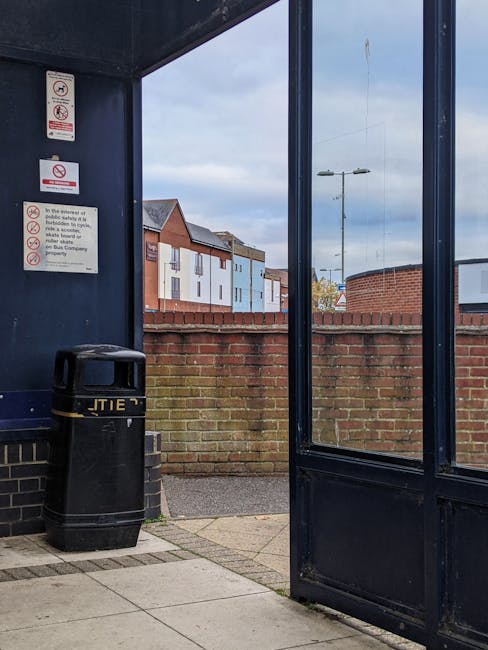
Penge West Station rubbish removal options for commuters
If you travel through Penge West Station and end up carrying an awkward bag of clutter, a broken chair, or a pile of packaging you meant to deal with "later", you are not alone. Commuting life has a way of creating small rubbish problems at exactly the wrong moment. The good news is that Penge West Station rubbish removal options for commuters are more flexible than many people expect. Whether you need a quick clear-out before work, a same-day pickup after a move, or a tidy solution for bulky items you cannot sensibly lug on the train, there are practical ways to handle it without derailing your day.
This guide walks through the real choices, how they work, what commuters should watch out for, and how to choose a service that fits around busy London routines. It is written for people who want the job done properly, not just moved from one corner to another. And honestly, isn't that the whole point?
Table of Contents
- Why Penge West Station rubbish removal options for commuters Matters
- How Penge West Station rubbish removal options for commuters Works
- Key Benefits and Practical Advantages
- Who This Is For and When It Makes Sense
- Step-by-Step Guidance
- Expert Tips for Better Results
- Common Mistakes to Avoid
- Tools, Resources and Recommendations
- Law, Compliance, Standards, or Best Practice
- Options, Methods, or Comparison Table
- Case Study or Real-World Example
- Practical Checklist
- Conclusion
- Frequently Asked Questions
Why Penge West Station rubbish removal options for commuters Matters
Penge West sits in that very familiar commuter zone where timing matters, platforms get busy, and nobody wants to spend five extra minutes wrestling a flattened box or a wobbly old desk on the pavement. For commuters, rubbish removal is not just about disposal. It is about convenience, safety, and not making a stressful morning even more chaotic.
There are several reasons this matters. First, commuters often deal with small but annoying jobs: packaging from a new purchase, old clothes ready for donation, a bag of mixed household waste after a flat refresh, or furniture that no longer fits your space. Second, you may not have the time or transport to take everything to a tip, even if you know where that tip is. Third, leaving items waiting at home "until the weekend" usually means they sit there for three more weekends. Truth be told, that happens to the best of us.
In a local context, it also matters because station-area journeys are usually short, rushed, and people-heavy. The wrong choice can mean a missed train, a sore back, or attempting a heroic carry that ends with you regretting every life decision since breakfast. Better to plan it once and be done with it.
If the rubbish is part of a larger clear-out, it may help to look at broader options such as waste removal or, for home-based jobs, home clearance. Those services are especially useful when the "small commuter job" turns into something bigger by lunchtime, as these things often do.
How Penge West Station rubbish removal options for commuters Works
At a simple level, commuter rubbish removal works by removing the friction between "I need this gone" and "this is actually gone." The exact process depends on what you have, how much there is, and how quickly you need it collected. Some people need a one-off uplift after moving flat. Others want help with bags, cardboard, or one bulky item on a tight schedule before or after the workday.
Most practical arrangements follow the same pattern:
- You identify what needs removing.
- You decide whether the items are mixed rubbish, recyclable material, or reusable goods.
- You choose a collection window that fits around commuting hours.
- The collection happens from your home, street-level access point, or another agreed location.
- The waste is sorted, loaded, and taken away for appropriate disposal or recycling.
For commuters, timing is everything. A good setup should feel calm and predictable, not like a puzzle that needs solving on the platform. If you know you are travelling out early and returning late, the best option is often a collection booked for a quiet mid-morning slot or a late afternoon window when someone can meet the team. Simple, really.
The type of waste also affects the approach. Bulky household items are very different from loose bags of general rubbish. For example, a commuter clearing a spare room might need furniture disposal, while someone emptying a storage-heavy flat might be better served by flat clearance. That distinction saves time and reduces surprises.
Key Benefits and Practical Advantages
The biggest benefit is obvious: you save time. But for commuters, the benefits go beyond that. Good rubbish removal removes stress before it builds up. It keeps hallways clear, helps you avoid awkward lift journeys with bulky bags, and stops clutter from becoming an eyesore the second you walk in the door.
Here are the main advantages people usually notice:
- Time-saving: You avoid multiple trips, parking headaches, and the whole "where do I even take this?" problem.
- Less physical strain: No dragging heavy items through tight stairwells or across wet pavements on a windy evening.
- Better routine control: You can book around the commute instead of losing a whole day.
- Cleaner living space: Clearing waste early makes your home feel more manageable, which sounds minor until you experience it.
- More suitable for mixed loads: Many commuter jobs include a bit of everything, from packaging to furniture.
- Peace of mind: You know the waste is being handled in a professional way rather than being left as a nagging task.
There is also a quieter benefit: momentum. Once the clutter is gone, people often keep going. The side table gets wiped down. The hallway gets cleared. The room feels bigger. The air even smells fresher, oddly enough, especially after old cardboard and damp packaging have been removed. Small win, but a proper one.
For anyone comparing options across broader needs, services like furniture clearance and house clearance can help if the job has grown beyond simple rubbish bags.
Who This Is For and When It Makes Sense
This kind of service is ideal for commuters who live busy, space-limited lives and cannot easily shift waste themselves. That includes renters, homeowners, flat sharers, people moving in or out, remote workers who still commute part-time, and anyone who keeps discovering "temporary" clutter that has become semi-permanent.
It makes sense when:
- You have bulky or awkward items you cannot carry on public transport.
- You want waste gone before or after a commute without taking time off work.
- Your rubbish includes a mix of cardboard, soft furnishings, broken household items, or general junk.
- You are clearing a room, loft, garage, or storage area and want a proper finish.
- You need a reliable option for times when council-style disposal routes are inconvenient or too slow for your schedule.
A common commuter scenario is this: you buy a new wardrobe or desk, the packaging piles up in the corner, and suddenly the old item plus the new packaging plus "that bag of stuff" becomes a small mountain. It is not laziness. It is just life. Services that handle broader clearances, such as loft clearance or garage clearance, can be especially useful when the pile comes from years of a not-quite-finished sort-out.
Step-by-Step Guidance
If you want the smoothest experience, keep the process simple and organised. Here is a practical way to approach it.
- Sort the waste into clear groups. Separate general rubbish, recyclables, reusable items, and anything that may need special handling.
- Measure bulky items. A quick length and width check helps avoid access problems. This is especially useful for stairwells and narrow hallways.
- Choose the right service type. A few bags is one thing; a set of wardrobes, mattresses, and old office bits is another.
- Check access details. Can the team park nearby? Is there a lift? Will someone be home to open the door?
- Book a slot that fits commuting patterns. If you work early, a mid-morning or later window may be easier than rushing before the first train.
- Make a quick "keep, donate, remove" decision. Do this before collection day. It saves arguments with yourself in the morning.
- Prepare the items neatly. Bags tied, boxes flattened, and loose bits gathered together help the collection move faster.
- Confirm what happens next. Make sure you understand what will be taken and whether there are any restricted items.
One small tip that pays off: stand back and look at the pile once it is sorted. If it still feels chaotic, it usually means something is still in the wrong category. That extra two minutes can save a lot of back-and-forth later.
Expert Tips for Better Results
From experience, the best rubbish removal jobs are the ones that are prepared with a little care, not rushed at the last second. A few simple habits make everything easier.
- Book before the clutter becomes urgent. Once you are tripping over it every morning, the job feels bigger than it is.
- Group similar items together. Cardboard with cardboard, soft furnishings together, general rubbish together. It helps everyone move faster.
- Keep a clear path to the door. This sounds obvious, but it is often forgotten.
- Be honest about volume. Guessing low can lead to the wrong vehicle or not enough time.
- Ask about recycling. If you care about responsible disposal, it is worth choosing a provider with a sensible approach to sorting and recovery.
- Use quieter times when you can. Midweek mornings are often less hectic than Friday evenings. Lovely difference, really.
It also helps to think in terms of "one clean sweep." If you know you will only partly clear the space, make a note of what remains. That way you can plan the next round instead of starting over from scratch. And yes, there is always a next round if you have a loft or garage involved.
If you are comparing providers, look for clear information on pricing and quotes and a sensible explanation of how collections are handled. Transparency matters more than flashy promises.
Common Mistakes to Avoid
A lot of commuter waste removal problems come from small planning errors rather than major issues. The good news is that these are easy to avoid once you know what to look for.
- Leaving everything until the last minute. You then have to sort, lift, and book under pressure.
- Mixing too many item types together. This can slow down collection and make quotes less accurate.
- Assuming every item is acceptable. Some items may need separate handling, so check in advance.
- Ignoring access issues. A narrow stairwell or blocked doorway can turn a straightforward job into a frustrating one.
- Forgetting about neighbours or building rules. In flats, shared spaces matter. Nobody loves a corridor full of bins at 7:30 a.m.
- Choosing convenience without checking trust signals. Convenience is useful, but so is professionalism.
A surprisingly common mistake is not telling the collection team what is at the bottom of the pile. A bag of cardboard looks harmless until it isn't. Be clear from the outset. It saves hassle, and frankly, everyone prefers that.
Tools, Resources and Recommendations
You do not need a toolkit the size of a shed, but a few simple things help commuters stay organised.
- Strong bin bags or rubble sacks: Useful for general waste and loose items.
- Marker pen: Great for labelling "keep", "donate", or "remove".
- Measuring tape: Handy for checking bulky items against doors and stairs.
- Box cutter or scissors: Ideal for breaking down packaging safely.
- Gloves: Basic, but worth it for awkward or dusty items.
- Phone notes app: Useful for listing what is going and what is staying.
For larger domestic clear-outs, it can also help to review related service pages that match the job properly. For example, furniture clearance is a better fit than general waste removal when the load is mostly bulky household items. Likewise, garage clearance works well when the space has become a catch-all for old tools, boxes, and forgotten odds and ends.
If the goal is to remove waste responsibly, the company's recycling and sustainability information is worth reading. A good provider should be able to explain, in plain English, how they aim to separate reusable and recyclable materials.
Law, Compliance, Standards, or Best Practice
Waste removal in the UK is not something to shrug off casually. Even for a small commuter job, it is wise to choose a provider that follows proper waste handling practices and can show that items are being transferred and managed responsibly. You do not need to become an expert in waste law, but you do need to avoid fly-tipping risks and unclear disposal arrangements.
Best practice usually means:
- Using a provider that handles waste lawfully and responsibly.
- Being honest about the type and volume of waste.
- Checking that items are not left on the street without agreement.
- Making sure any special items are flagged in advance.
- Keeping records or confirmation details where appropriate, especially for larger or repeated clearances.
For business users who commute into Penge West and occasionally need a workplace clear-out, business waste removal and office clearance may be more suitable than a general household service. If you are dealing with refurbishment debris, builders waste clearance is usually the better fit. Different waste, different handling, different expectations.
It is also sensible to check practical business details such as insurance and safety, plus the provider's health and safety policy. That is not being fussy. It is basic diligence, and it protects everyone involved.
Options, Methods, or Comparison Table
There is no single right method for every commuter. The best option depends on what you are removing, how much time you have, and how awkward the items are. Here is a simple comparison.
| Option | Best for | Pros | Watch-outs |
|---|---|---|---|
| Self-disposal | Very small loads, a few bags, light packaging | Low direct cost, flexible if you already have transport | Time-consuming, tiring, awkward around the commute |
| Booked waste removal | Mixed household waste, bulky items, time-poor commuters | Convenient, quicker, less lifting for you | Needs clear information about volume and access |
| Furniture-specific clearance | Sofas, wardrobes, beds, single large items | Better suited to bulky pieces, less guesswork | May not suit bagged rubbish on its own |
| Full flat or home clearance | Moves, deep declutters, landlord handbacks | Most comprehensive, efficient for larger jobs | More to organise upfront |
If the situation feels like "a bit of everything," general waste removal is often the safest starting point. If it is mostly one category, such as furniture or a flat clear-out, go with the more specific route. That usually saves time and makes the job feel less messy from the first phone call to the last bag.
Case Study or Real-World Example
Consider a typical commuter scenario. A professional living a short walk from Penge West has been building up clutter after redecorating a bedroom. There is a broken bedside cabinet, several cardboard boxes, a bag of old clothes, and a flat-pack box that somehow survived for two weeks longer than anyone intended. Each morning the pile is there, quietly judging the household.
Instead of trying to squeeze everything into a weekend timetable, they separate the items into three groups: recyclable cardboard, general rubbish, and bulky furniture. They book a collection for a late morning slot on a day when they can work from home. The access point is cleared the night before, the items are staged neatly, and the whole thing is gone in one visit.
The practical result is not dramatic, but it is satisfying. The room feels calmer. The hallway is clear. There is no lingering pile waiting to annoy someone on Monday. And that matters more than people admit.
For a more expansive version of that same scenario, home-based services such as home clearance or house clearance would be appropriate if the clutter had spread beyond one room.
Practical Checklist
Use this quick checklist before arranging Penge West Station rubbish removal options for commuters.
- Have I sorted the waste into clear categories?
- Do I know whether the items are general rubbish, recyclable, or bulky furniture?
- Have I measured anything awkward or heavy?
- Is the access route clear and safe?
- Have I chosen a collection time that fits my commute?
- Do I understand what can and cannot be taken?
- Have I checked the provider's transparency on pricing and safety?
- Is everything ready to collect in one place?
- Do I need a specialist service rather than a general waste pickup?
- Have I set aside any items I want to keep, donate, or sell?
Expert summary: the best commuter rubbish removal is the one that reduces stress, fits your travel pattern, and avoids unnecessary lifting. Keep it simple, keep it tidy, and do not underestimate how much easier life feels once the clutter is gone. Really, it is one of those jobs you only appreciate fully after it has been done.
Conclusion
Penge West Station rubbish removal options for commuters are all about making everyday life easier. If you are balancing trains, work, home, and the usual London squeeze for time and space, a well-chosen collection service can remove a surprising amount of friction from your week. The best approach is usually straightforward: sort the waste, choose the right service type, book a sensible time, and let the process do what it is meant to do.
Whether your job is a few bags, a stubborn sofa, or a full flat clear-out, the key is to act before clutter becomes a background stress you stop noticing. Once it is gone, you will feel the difference immediately. The space looks better, the room feels lighter, and the commute gets to stay a commute instead of turning into a moving day. That's the goal, after all.
Get a free quote today and see how much you can save.
Frequently Asked Questions
What are the best rubbish removal options for commuters near Penge West Station?
The best option depends on how much you need removed and how quickly you need it gone. For small bagged waste, simple waste removal may be enough. For larger loads, furniture disposal, flat clearance, or a broader home clearance can be more practical.
Can I arrange rubbish removal around my commute?
Yes. That is one of the main advantages for commuters. A good service should offer collection times that work around your travel schedule, so you do not have to lose an entire day.
Is it better to use general waste removal or a furniture-specific service?
If the load is mainly bulky items like beds, wardrobes, or sofas, furniture clearance or furniture disposal is usually the better choice. If you have mixed rubbish, waste removal is often more suitable.
What should I do before the collection team arrives?
Sort the items, clear access paths, and keep anything you want to retain out of the collection area. It also helps to group similar waste together so the job can be completed quickly.
Can I mix cardboard, clothes, and old furniture in one collection?
Often yes, but it depends on the provider and how the waste is handled. Mixed loads are common, though it is always better to describe the contents clearly in advance.
How do I know if I need a flat clearance instead of simple rubbish removal?
If you are clearing several rooms, moving out, or dealing with a large amount of household contents, flat clearance is usually the better fit. For smaller one-off waste jobs, general removal may be enough.
Is it safe to leave waste outside near the station or on the pavement?
No, not unless the collection has been clearly arranged and the provider has confirmed the process. Leaving waste out carelessly can create safety issues and other problems, so it is better to follow agreed instructions exactly.
What kind of commuter rubbish is most commonly removed?
Typical items include cardboard packaging, broken household bits, small furniture, old clothes, bags of mixed junk, and the sort of things that build up after a move or home refresh.
How should I choose between home clearance and waste removal?
If you are dealing with a room, flat, or several different item types, home clearance or house clearance may be more efficient. If you simply have loose waste or a smaller mixed load, standard waste removal is often enough.
What should I ask before booking?
Ask about pricing, access requirements, what items can be taken, and how the provider handles recycling. It is also sensible to check safety information and whether the service suits the size of your load.
Are there any compliance issues I should worry about?
The key concern is making sure waste is handled properly and not left in a way that causes problems. Choose a provider with clear safety and disposal information, and be honest about what you need removed.
Can commuters use these services for office or business waste too?
Yes, if the waste is work-related, business waste removal or office clearance may be the more suitable option. That is especially useful for commuters who carry work items home or are helping with a workplace refresh.
If you want to understand the company behind the service, you can also review the about us page, and for formal details such as terms and conditions or privacy policy, those pages are available too. If you still have questions after that, the most sensible next step is to reach out directly through the site and talk through your load in plain terms.