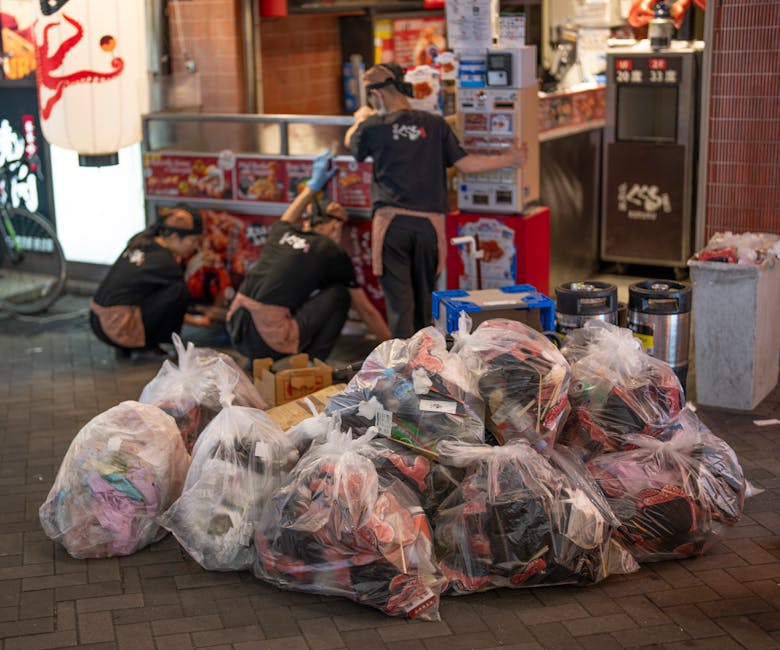
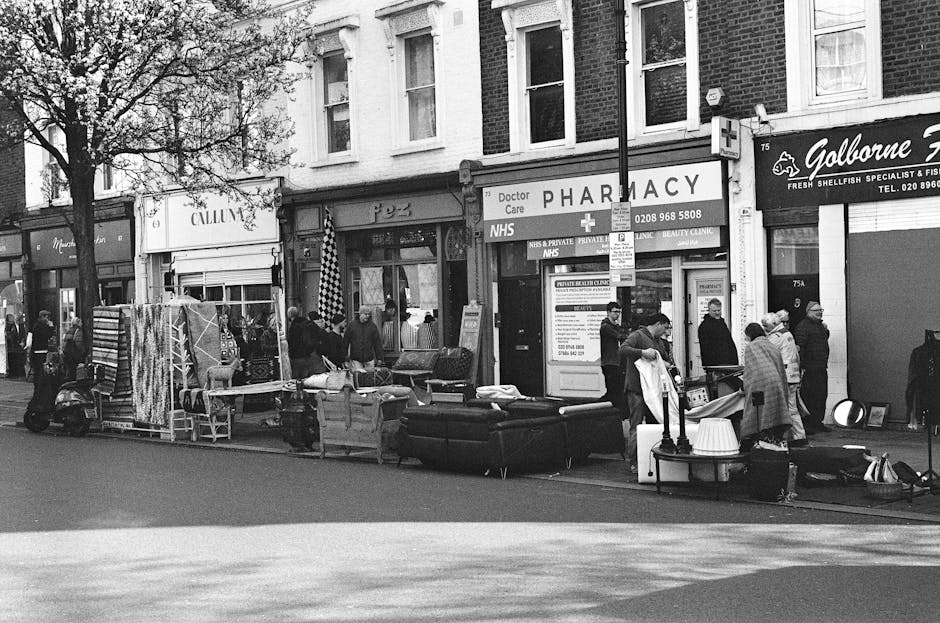
Penge High Street shop rubbish removal for local businesses
Running a shop on Penge High Street is busy enough without waste piling up behind the till, in the yard, or near the back door. Cardboard from deliveries, broken shelving, old display units, packaging film, stock that cannot be sold, and the odd surprise from a refurb all need clearing quickly and properly. That is where Penge High Street shop rubbish removal for local businesses comes in: a practical, reliable way to keep your premises tidy, safe, and ready for customers.
If you manage a small retail unit, cafe, salon, or independent business nearby, you already know how fast clutter builds. One late delivery day and suddenly the bin store is full. Add a busy weekend or a seasonal promotion and, well, it can snowball. This guide explains how local commercial waste removal works, what to expect, how to avoid common problems, and how to choose the right approach for your business without making it harder than it needs to be.
There is no glamour in rubbish removal, of course. But there is relief in opening the shutters on a clean, clear frontage and not having to step around yesterday's packing waste at 8:30 in the morning. That matters more than people think.
Table of Contents
- Why Penge High Street shop rubbish removal for local businesses matters
- How Penge High Street shop rubbish removal for local businesses works
- Key benefits and practical advantages
- Who this is for and when it makes sense
- Step-by-step guidance
- Expert tips for better results
- Common mistakes to avoid
- Tools, resources and recommendations
- Law, compliance, standards, or best practice
- Options, methods, or comparison table
- Case study or real-world example
- Practical checklist
- Conclusion
- Frequently Asked Questions
Why Penge High Street shop rubbish removal for local businesses Matters
For a shop on a high street, waste is not just "stuff to get rid of". It affects how customers see your business, how staff move around the premises, and how smoothly deliveries and collections happen. A neat front of house can make a small shop feel organised and trustworthy; a messy rear access area can do the opposite in seconds.
Local businesses often deal with a mixed waste stream. That might include cardboard, shrink wrap, damaged stock, old signage, furniture, broken fittings, and general rubbish from day-to-day operations. If those items are not cleared regularly, they can block access routes, attract pests, create trip hazards, and make basic cleaning much harder. Nobody wants to start a Monday shifting boxes before the doors open.
There is also the customer perception side. On a busy stretch like Penge High Street, people notice what is left outside premises. A few sacks left in the wrong place or a stack of broken pallets by the front can make a business look temporary or poorly managed. That is unfair, maybe, but it is how people read a street at a glance.
And then there is time. Staff should be serving customers, unpacking stock, or keeping the place running, not making repeated trips to a distant bin or waiting for an overloaded container to be emptied. Efficient rubbish removal gives you time back, plain and simple.
How Penge High Street shop rubbish removal for local businesses Works
Commercial rubbish removal is usually more flexible than a standard council bin set-up. The process often starts with a quick assessment of what needs removing, how much there is, and whether any items need special handling. From there, collection can be arranged for a one-off clearance or on a regular schedule.
For a shop business, the practical steps are usually straightforward:
- Identify the waste type. Is it general shop waste, cardboard, display materials, old furniture, or something more specific such as electrical items?
- Estimate the volume. A few sacks is very different from a full store refit.
- Choose the collection style. Some businesses need a same-day clearance; others need a planned pickup outside trading hours.
- Prepare access. Keep the route clear so the team can move items safely and quickly.
- Confirm sorting and disposal. Reputable operators will separate recyclable materials where possible and explain what happens to the waste.
In practice, this can be as simple as setting aside cardboard and broken packaging through the week, then arranging a collection at the end of a busy period. That is often easier than trying to stay on top of it item by item. To be fair, most shop teams already have enough on their plate.
For businesses near the high street, timing matters. Morning collections may suit some premises; others prefer after closing time to avoid getting in the way of customers. If you have narrow access, shared alleyways, or limited kerb space, a clear plan helps the removal go smoothly and reduces disruption.
If your waste is part of a broader clean-out, you may also want to look at related services such as business waste removal or, where the shop is being refitted, office clearance. For bulkier items like counters or shelving, furniture disposal may be the better fit. Different jobs, different tools. Simple as that.
Key Benefits and Practical Advantages
The best rubbish removal service does more than clear bags away. It helps the business run better day to day. That sounds obvious, but the benefits show up in very practical ways.
| Benefit | What it means for your shop | Why it matters |
|---|---|---|
| Cleaner premises | Less clutter in stockrooms, doorways, and rear access areas | Safer movement and a better first impression |
| Improved efficiency | Staff spend less time moving waste around | More time for sales, service, and restocking |
| Better space use | Storage areas stay usable | Helps with stock rotation and deliveries |
| Reduced risk | Lower chance of trip hazards and blocked exits | Supports a safer workplace |
| Flexible scheduling | Collections can fit around trading hours | Less disruption to customers |
| More responsible disposal | Materials can be separated for recycling | Supports sustainability goals |
There is also a morale benefit. Staff generally work better in a tidy, organised space. It is one of those quiet things nobody praises enough. A clear back room can change the rhythm of a whole shift.
If you are comparing broader waste and clearance support, it can help to understand the difference between general removal and more item-specific services like waste removal or builders waste clearance. Shops often end up with a mixture of commercial waste and odd renovation debris, especially during refurb season.
Who This Is For and When It Makes Sense
This service is relevant for any business that generates waste faster than its usual bins can handle. On Penge High Street, that often includes small retailers, takeaways, salons, convenience stores, charity shops, cafes, pop-up shops, and service-based premises with limited storage space.
You will probably need shop rubbish removal if:
- you are refitting or refreshing the premises
- your stockroom is overcrowded with cardboard and packaging
- you have old furniture, fixtures, or display units to remove
- you need a one-off clearance after a busy trading period
- your regular waste contractor is not clearing bulky items
- you have inherited a cluttered site and need a clean start
It also makes sense when waste starts affecting customer experience. Perhaps the back access area looks tidy enough most of the week, but after a delivery day it turns into a maze of boxes and tape. Or maybe you are doing a mini refurb and do not want debris sat around for days. That is exactly when a fast, organised collection earns its keep.
Some businesses only need a one-off visit. Others benefit from regular collections, especially if they generate lots of cardboard or packing materials. The right answer depends on volume, frequency, and how much space you have available. Truth be told, many shops underestimate how quickly waste can build until it starts getting in the way.
Step-by-Step Guidance
If you are arranging Penge High Street shop rubbish removal for the first time, keep the process simple. You do not need a grand system. You need a clear one.
- Walk the premises with fresh eyes. Check the stockroom, rear entrance, under-counter areas, and any place where waste tends to gather. You will spot the patterns quickly.
- Separate items by type. Cardboard, plastics, old furniture, mixed rubbish, and reusable materials should not be thrown into one heap if they can be sorted beforehand.
- Flag anything unusual. Electrical items, sharp materials, or anything that could be hazardous needs extra attention.
- Estimate how much there is. A small load, half-load, or larger clearance will usually determine the vehicle and crew needed.
- Pick a collection time that suits the business. If you trade heavily in the morning, an early slot may be awkward. If you stay open late, a late pickup might be better.
- Prepare access routes. Move stock trolleys, unlock gates, and keep the path as open as you can.
- Ask how disposal is handled. It is sensible to know whether recyclable materials are separated and where the waste is likely to go.
- Review what remains afterwards. A good clearance should leave the area usable, not just "less bad".
If you are clearing larger premises or a mixed-use site, you may also need to combine this with house clearance style sorting logic, even though it is a commercial setting. The principle is the same: know what you have, separate what matters, and avoid last-minute chaos.
A useful rule of thumb? Clear the obvious first. Cardboard and broken packaging are the low-hanging fruit. Once those are out of the way, the rest of the job feels smaller, which is a nice feeling on a hectic Thursday afternoon.
Expert Tips for Better Results
A few small habits can make shop rubbish removal much smoother. These are the things that tend to save time, money, and hassle.
- Keep cardboard flattened. It takes up far less space and is easier to move. A stockroom full of unflattened boxes can swallow a surprising amount of room.
- Use a simple "keep, recycle, remove" zone. Even three labelled areas in the back can stop waste from spreading everywhere.
- Schedule around deliveries. If the collection happens on the same day as a major delivery, you may just create extra congestion.
- Photograph bulky items in advance. This helps when checking whether furniture, fixtures, or mixed waste will fit into the planned collection.
- Bundle similar materials together. It speeds up loading and usually makes the job more efficient.
- Think about seasonal peaks. Christmas, summer sales, and refurbishment periods all create more waste than a normal week.
A slightly old-school but genuinely useful trick: keep one "overflow" spot ready for the unexpected. Not a dumping ground, mind you. Just a designated temporary area for the week when the back room suddenly starts looking like a paper factory exploded. It happens.
If your waste stream includes mixed recyclable materials, it can also be worth reviewing your packaging habits. Sometimes the cleanest clearance starts with fewer boxes in the first place. The service may remove the problem, but a small process tweak can reduce how often you need it.
Common Mistakes to Avoid
Most waste problems in retail are not dramatic. They are usually the result of a few small habits repeated over time. Here are the ones that catch businesses out most often.
- Waiting until the space is already cramped. By then, removal is slower and staff are working around the pile.
- Mixing everything together. A blended load can be harder to sort and may reduce recycling opportunities.
- Forgetting about access. If the removal team cannot get to the items easily, the job takes longer than planned.
- Leaving heavy items for staff to move without support. That is a back-injury waiting to happen.
- Assuming all waste can be treated the same way. Some items need separate handling, especially anything sharp, electrical, or potentially hazardous.
- Not checking the provider's insurance and working practices. If something goes wrong, you want confidence in how it is handled.
Another classic mistake? Underestimating how quickly waste reappears after a tidy-up. You clear the shop beautifully on Friday, then Monday rolls around with fresh deliveries and a mountain of packaging. It is a bit like washing the car before rain, only more annoying.
The fix is not complicated: build waste handling into the normal rhythm of the business instead of treating it as an emergency every time.
Tools, Resources and Recommendations
You do not need fancy systems to manage shop waste well. A few practical tools are often enough.
- Sturdy wheelie bins or internal waste bins for everyday rubbish
- Flattening tools or simple box cutters for breaking down cardboard safely
- Labelled sacks or tubs for separating recyclable and general waste
- Storage straps or stacking aids for securing loose materials
- Protective gloves for staff handling rough or awkward items
- Trolleys or dollies for heavier clearances
For a business in a tight high-street location, the most useful "resource" is often planning. A written waste routine, even a short one, keeps everyone on the same page. Who flattens the boxes? Where do broken fixtures go? When is pickup booked? It sounds basic, but basic is good when operations are busy.
If you want to understand how different clearance services fit together, the site's recycling and sustainability approach is a useful companion read, especially if your business wants to reduce what ends up as mixed waste. For older or worn-out stockroom items, furniture clearance can be relevant too.
And if you are in the middle of a broader property clean-out rather than a routine waste issue, browsing the blog can help you compare different removal scenarios in plain English.
Law, Compliance, Standards, or Best Practice
For businesses, waste is not just an operational issue. It also sits within normal UK commercial waste responsibilities, so it is worth handling it properly. You do not need to become a legal expert overnight, but you should use a provider and process that look sensible, traceable, and safe.
At a practical level, good practice usually means:
- keeping waste separated where possible
- avoiding unsafe storage in walkways, exits, or fire routes
- using a provider that can explain collection and disposal clearly
- keeping an eye on anything that could be classed as hazardous or specialist waste
- making sure staff know what they are allowed to throw away and where
Some items need extra care. Paints, chemicals, sharps, certain electrical goods, and other specialist materials should not be treated like ordinary shop waste. If you are unsure, pause and ask first. Better to slow down once than deal with a messy problem later.
Insurance and safety also matter. A well-run removal service should be able to explain how it handles lifting, loading, access, and protection of the premises. That is especially useful if your shop has narrow entrances, shared access ways, or customers passing close by. The details matter here. They really do.
For general reassurance, reviewing a provider's health and safety policy and insurance and safety information is a sensible step before booking. If you need to understand how pricing is approached, pricing and quotes is also worth a look.
Options, Methods, or Comparison Table
There is more than one way to deal with shop rubbish. The right method depends on how much waste you have, how fast it needs moving, and whether the items are bulky or mixed.
| Method | Best for | Pros | Limitations |
|---|---|---|---|
| Regular bin collection | Everyday light waste | Simple, routine, familiar | Not ideal for bulky items or sudden surges |
| One-off clearance | Seasonal clear-outs, refits, stockroom resets | Fast, flexible, handles large volumes | Needs upfront planning |
| Scheduled commercial waste removal | Shops with predictable waste output | Keeps space clear all year | May be more than needed for small businesses |
| Self-haul to a facility | Very small amounts, if you have transport | Direct control | Time-consuming and not always practical |
For most Penge High Street businesses, a combination works best. Everyday waste goes one way. Periodic bulky rubbish goes another. That split keeps the shop tidy without overcomplicating the whole operation.
If your clearance is tied to a shop move, a fitting-out project, or a large backroom refresh, a broader service such as home clearance is not the right fit, but the comparison can still help you think in terms of volume, access, and sorting. And if the job is tied to a messy refit, the practical lessons from builders waste clearance can be surprisingly relevant.
Case Study or Real-World Example
Imagine a small independent shop on or near Penge High Street preparing for a window refresh and a mini stockroom clear-out. Over a few weeks, cardboard starts stacking up behind the counter. Two damaged display units are shoved to one side. A broken chair, a pile of packaging, and several old promotional boards join the mix.
At first, the space still feels manageable. Then a delivery lands on a wet Wednesday morning and the back room becomes awkward to move through. Staff have to weave around boxes to get to stock. The manager notices that customers can see some of the clutter through the side access door, and that is not ideal. Not disastrous. Just a bit scruffy, which is enough.
They book a clearance for after closing. The waste is grouped before pickup: cardboard flattened, display boards together, furniture separated, and loose rubbish bagged. The collection is done in one go, the room is left open again, and the team can carry on with the refresh the next day without tripping over debris. The difference is immediate. You feel it when the door opens the next morning.
That is the real value here. Not just "taking rubbish away", but restoring usable space and reducing friction. For a small shop, that can have a bigger impact than people expect.
Practical Checklist
Use this checklist before arranging a clearance or waste pickup for your shop.
- Identify the type of waste you need removed
- Separate cardboard, packaging, furniture, and general rubbish
- Check whether any items need specialist handling
- Measure or estimate the total volume
- Choose a collection time that does not disrupt trading
- Clear access routes inside and outside the premises
- Remove valuable stock or confidential items from the area
- Ask how recyclable materials are handled
- Confirm insurance and safety arrangements
- Make a quick note of what was removed for your own records
Key takeaway: if the waste is stopping your staff from working comfortably, or making the shop look untidy to customers, it is already costing you something. Clearing it properly is often cheaper than letting the mess drag on.
Conclusion
Penge High Street shop rubbish removal for local businesses is really about keeping trade moving. Clean spaces, clear access, safer working conditions, and a better impression for customers all come from the same practical habit: deal with waste before it becomes a problem.
Whether you need a one-off clearance after a refit, help with bulky shop waste, or a simple plan for keeping the back room under control, the best approach is the one that fits your day-to-day rhythm. Keep it simple, keep it safe, and do not leave it until the clutter starts making decisions for you. That is when things get annoying.
If you are weighing up collection options, comparing volumes, or trying to get a clearer idea of what suits your premises, it is sensible to speak to a local team that understands high-street access, business schedules, and the kind of waste shops generate week in, week out. Small details make a big difference.
Get a free quote today and see how much you can save.
Sometimes the cleanest shop is not the one with the biggest budget. It is the one that stays one step ahead.
Frequently Asked Questions
What counts as shop rubbish for a local business?
Shop rubbish usually includes cardboard, packaging, broken fixtures, old display units, damaged stock, mixed general waste, and other items produced by day-to-day trading. If you are unsure about a specific item, especially anything electrical or potentially hazardous, it is better to check before putting it out for collection.
How often should a shop on Penge High Street arrange rubbish removal?
That depends on how much waste you produce. Some businesses need regular collections every week or two, while others only need occasional one-off clearances after deliveries, seasonal changes, or refurbishments. The best frequency is the one that keeps your premises clear without unnecessary cost.
Can bulky shop furniture be removed as part of the same service?
Yes, in many cases. Display cabinets, shelving, chairs, counters, and similar items can often be removed alongside ordinary shop waste, provided access is safe and the items are suitable for the planned collection. It helps to mention bulky pieces in advance so the right vehicle and team can be arranged.
Is same-day rubbish removal available for businesses?
Sometimes, yes. Same-day or next-day collections can be useful when waste is building up fast or when a shop needs to reopen cleanly after a delivery or refit. Availability depends on workload, access, and the size of the job, so it is wise to ask early if timing is tight.
What is the difference between commercial waste removal and general waste collection?
Commercial waste removal is designed for business premises and often covers mixed loads, bulky items, and more flexible timing. General waste collection is usually the routine service for everyday rubbish. A shop often needs both: routine disposal for daily waste and separate clearance for larger, less frequent jobs.
Do I need to sort cardboard from mixed rubbish before collection?
It is not always required, but sorting cardboard and recyclable items usually makes the job more efficient and can support better recycling outcomes. Even a basic split between cardboard, general waste, and bulky items can make a real difference to how smoothly the collection goes.
How do I avoid waste building up behind the shop?
A simple routine helps. Flatten boxes as they arrive, set aside a clear area for overflow, label bins or sacks properly, and schedule removals before the back room gets crowded. Most problems start small. Once they are part of the weekly rhythm, they are much easier to stay on top of.
Can waste removal be arranged outside trading hours?
Often, yes. Many businesses prefer early morning or evening collections so customers are not disrupted and staff can keep serving. This is especially helpful on a busy high street where access and footfall can make daytime work awkward.
What should I ask before booking a collection?
Ask what types of waste are accepted, how bulky items are handled, whether recyclable materials are separated, what access is needed, and how the pricing is structured. It is also sensible to check insurance and safety arrangements, especially if the premises have tight or shared access.
Is shop waste removal useful during a refurbishment?
Absolutely. Refurbishments create a mix of old fixtures, packaging, offcuts, and general debris. Having a clear removal plan keeps the project moving and stops waste from clogging up the shop floor or stockroom. It is one of those things that feels minor until it is not.
What happens to the waste after collection?
That depends on the type of material and the provider's process. Recyclable items should be separated where possible, while general waste is taken for appropriate disposal. If sustainability matters to your business, ask how sorting is handled before the job starts.
Can I use the same service for office and shop clearances?
In some cases, yes. If your premises include a back office, storage room, or mixed-use space, services like office-style clearance may be relevant alongside shop waste removal. The important thing is to describe the full job clearly so nothing gets missed.